




By Carolyn Lumsden
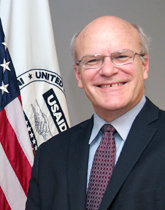
Donald Steinberg, deputy administrator at the U.S. Agency for International Development, is an optimistic fellow.
Steinberg (right, State Dept photo) sees a lot of good things happening, in part because President Obama is such an inspiration, in part because of technology and in part because of so many funding sources for development, including private Americans ($40 billion a year), remittances ($100 billion) and the private sector (a trillion).
In his April briefing to the State Department's AOJ guests, Steinberg said 600 million people have crossed the poverty line, and there's been a 40 percent decline in infant mortality, "the lowest in my lifetime." Google has put aside money for a poverty museum in the hopes that it will be the only place you can see poverty by 2035.
New technologies and sustained efforts are solving lots of problems; examples:
-
Berkeley students are making pumps that will take arsenic out of drinking water in Bangladesh.
-
A socially responsible app will one day tell consumers how much trafficked labor was used in Target goods.
-
Cellphones are being turned into medical diagnostic tools in remote places.
-
13 of the 20 fastest growing countries are former A.I.D. nations.
-
Afghanistan has gone from no girls in school to 3,000.
-
Afghans' life expectancy has risen from 47 to 62 in 15 years.
Steinberg said: "We're not going to fight our way out of Afghanistan. We're going to develop our way out of Afghanistan."
The U.S. is reforming the way it does food aid, using some local food and vouchers and cutting back on shipping U.S.-grown food. He says it's an opportunity to "feed 2 to 4 million more people with the same amount of resources."
During questioning, Steinberg said his agency is doing more evaluation of projects, to see what works and what doesn't. It has 1,600 partnerships with the private sector.
He said genetically modified organisms are "a benefit in our mind" if they're properly tested. GMOs have produced drought-resistant seeds, provided greater nutrition in foods and made plants resistant to pests and diseases. He said care has to be given to avoid "unintended consequences," but "yes, we believe GMOs are our future." Some AOJ-State attendees from left: Richard Prince, Joe Davidson, Erick Vargas, Bruce Dold, Christian Trejbal, Bob Davis, Marjorie Arons-Barron, Miriam Pepper. Photo (c) 2013 by Carolyn Lumsden for AOJ
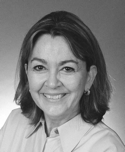
Carolyn Lumsden is editorial page editor of the Hartford (Conn.) Courant, member of the AOJ Board, and organizer of this year's State Department briefings.



